Chapter 1
Introduction to Agile Scrum
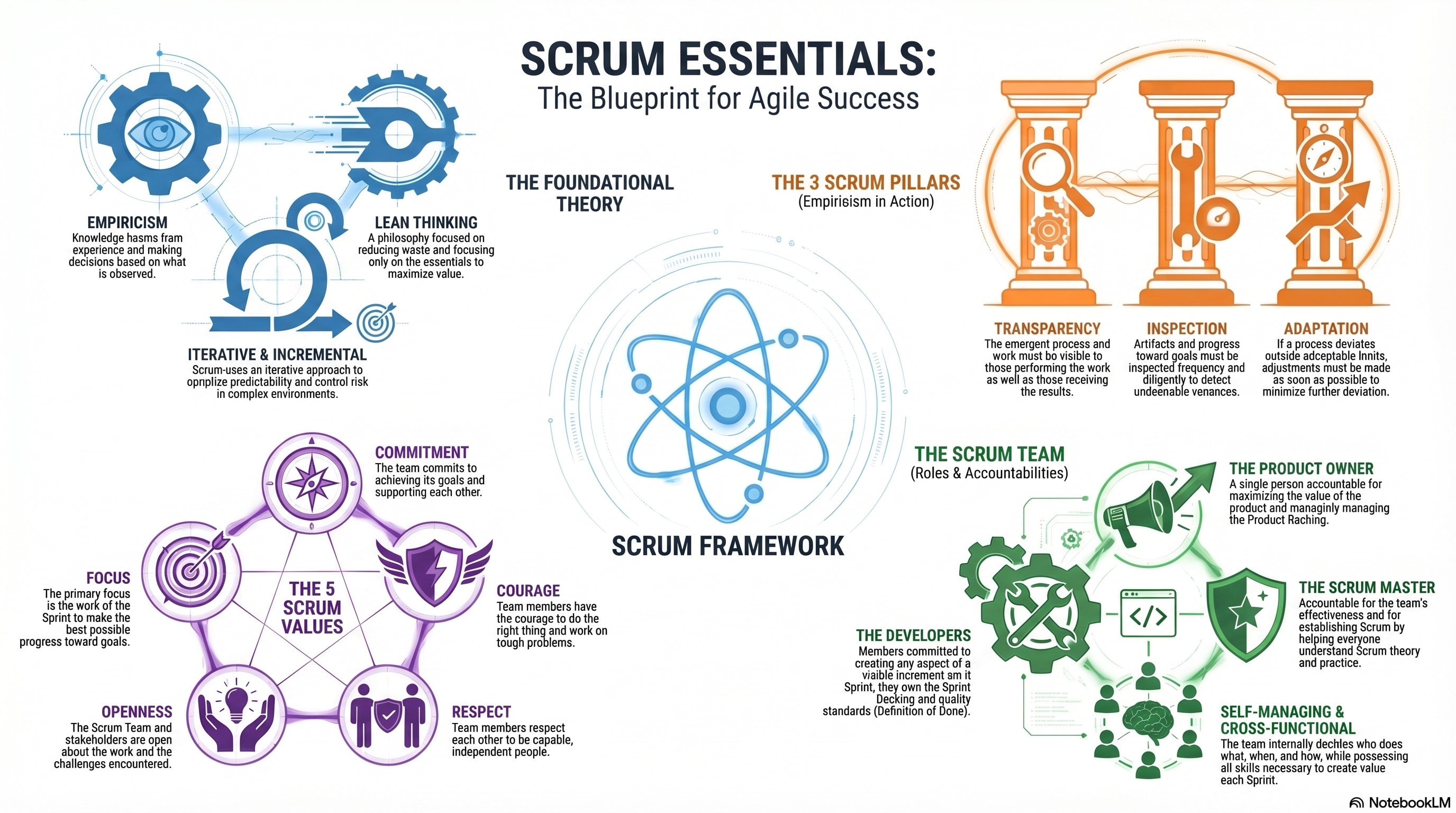
Agile Scrum is a lightweight framework for building products through short, iterative cycles. Instead of trying to define everything upfront, teams work in small increments, gather feedback early, and continuously improve both the product and the way they collaborate.
Why Scrum Matters
Scrum helps teams reduce delivery risk by breaking work into manageable pieces. It creates a rhythm for planning, building, reviewing, and improving, which makes progress more visible and problems easier to detect.
For product work, Scrum is useful because it encourages teams to focus on value, adapt to change, and keep users and business goals close to day-to-day execution.
Core Principles
At a high level, Scrum is built around a few practical ideas:
- Deliver value in small increments
- Learn from feedback frequently
- Prioritize collaboration across functions
- Make work visible and measurable
- Improve the process continuously
These principles help teams stay responsive without losing structure.
Key Roles In Scrum
Product Owner
The Product Owner is responsible for maximizing product value. This includes clarifying goals, prioritizing the backlog, and helping the team understand what matters most.
Scrum Master
The Scrum Master supports the team by facilitating the process, removing blockers, and helping everyone follow Scrum effectively.
Development Team
The development team turns planned work into working outcomes during each sprint. In practice, this usually includes engineers, designers, testers, and other contributors needed to deliver value.
Main Scrum Ceremonies
Sprint Planning
The team aligns on what will be delivered in the next sprint and how the selected work will be approached.
Daily Scrum
A short daily check-in helps the team stay aligned, surface issues early, and coordinate work.
Sprint Review
At the end of the sprint, the team reviews what was completed and gathers feedback from stakeholders.
Sprint Retrospective
The team reflects on how the sprint went and identifies ways to improve collaboration, quality, and delivery in the next cycle.
Scrum Artifacts
Scrum commonly works with a few core artifacts:
- Product Backlog: the prioritized list of work and opportunities
- Sprint Backlog: the selected work for the current sprint
- Increment: the usable outcome produced by the team
These artifacts help create clarity around priorities, commitment, and progress.
Scrum From A Product Mindset
From a product perspective, Scrum should not become a process for shipping tasks without context. The framework works best when backlog items are tied to user problems, product goals, and measurable outcomes.
That means a healthy Scrum practice usually includes:
- Clear product priorities
- Shared understanding of user needs
- Small, testable increments
- Frequent review of results and feedback
Scrum is most effective when it supports learning and decision making, not just delivery speed.
Common Misunderstandings
Teams often struggle with Scrum when they treat it as a rigid checklist. Scrum does not guarantee product success by itself. It only provides a structure that helps teams inspect, adapt, and coordinate more effectively.
Common failure patterns include:
- Planning too much work into a sprint
- Writing backlog items without clear value
- Using daily standups as status reporting for managers
- Skipping retrospectives or ignoring follow-up actions
Closing Thought
Agile Scrum is useful because it creates discipline around iteration, visibility, and improvement. When combined with strong product thinking, it helps teams deliver meaningful progress while staying adaptable as requirements and feedback evolve.